FleetApril 21, 2026 · 8 min read
Choosing a Fleet Service Provider in Schenectady: 9 Questions to Ask
Most fleets choose a shop the way they chose their first one: it was nearby and it answered the phone. Here are the nine questions that separate a shop that fixes trucks from one that keeps a fleet running.

Reviewed by the Fogg’s fleet & service team
ASE-certified technicians · Scotia, NY · Updated April 21, 2026

Most small fleets in the Capital Region ended up at their current shop by accident. It was close to the yard, it took the first van on short notice, and nobody ever revisited the decision. That works until the day two vehicles are down at once and the shop has one bay open and a two-day wait. Choosing a fleet service provider on purpose is a different exercise than choosing a mechanic for your own car. Here are the nine questions we think you should ask — including of us.
1. How many bays, and how many of them can take my vehicles?
Capacity is the first question because it decides everything else. A four-bay shop that is good with cars cannot promise a fleet anything on a Monday morning. Ask how many lifts can take a loaded full-size van, a Super Duty or a cutaway box truck — many lifts cannot — and how many vehicles the shop turns in a week. Fogg’s runs twenty-seven bays in 28,000 square feet on Route 50 in Scotia, including lifts sized for commercial vans and light and medium-duty trucks. Whatever the answer, make sure it matches the size of your fleet on its worst day.
2. What happens when a vehicle breaks down on a Tuesday?
A fleet vehicle off the road costs more per hour than a commuter car, and a shop that treats them the same is going to cost you. Ask specifically: do fleet units get priority in the schedule? Is there a way to drop a vehicle before the shop opens? How fast will someone look at it and call you with a diagnosis? Our answer is that fleet accounts jump the queue, early drop-off is standard, and you get a call with findings and a price before anything is approved. Get the answer in writing from whoever you choose.
3. Will you track intervals per vehicle, or is that my job?
The difference between a shop and a program is who watches the odometer. A real fleet program sets intervals for each unit — mileage or months, adjusted for how the vehicle is actually used — and calls you when a vehicle is due. If the answer is “you call us when they need an oil change,” you do not have a program; you have a shop that changes oil.
4. How do you handle New York State inspections for a fleet?
Every registered vehicle in New York needs an annual safety and emissions inspection, and in Schenectady County the state fee is $21. The fee is not the issue. The issue is whether the shop can inspect three, five or ten units in a morning, catch the brake-light bulb before it becomes a failure, and schedule expiring stickers a month ahead so a failed inspection becomes a planned repair rather than a van parked at the curb. Ask whether the shop is a licensed inspection station and whether it will batch your units. Ask, too, what it does when a vehicle has a check engine light on, because that is an automatic emissions failure and the shop should be diagnosing it, not clearing it.
5. What classes of vehicles and engines do you actually work on?
A fleet is rarely all one thing. Be specific: Transit and ProMaster vans, Express and Savana, Sprinter and Metris, HD pickups, cutaway and box trucks, Power Stroke and Duramax and Cummins diesels, Isuzu cab-overs. Ask about the diesel diagnostic tooling in particular. A shop that is honest about what it does not do is worth more than one that says yes to everything and sends your box truck to a subcontractor without telling you.
6. If my trucks need a DOT annual inspection, can you do that too?
Commercial vehicles over 10,000 pounds in interstate commerce need an annual federal inspection under the FMCSA rules, separate from the state sticker. Ask whether the shop performs them, who the qualified inspector is, and how the documentation is handled. Even if you do not need one today, a fleet that grows into heavier trucks will.
7. What does the invoice look like?
Ask to see a sample. A fleet invoice should list every vehicle separately, consolidate the month into one bill, and give you the history behind each unit so you can see cost per vehicle over time. Ask whether the shop can bill through a fleet management company or a national account if you use one. If the shop hands you a stack of individual tickets at the end of the month, you are going to be doing the bookkeeping yourself.
8. How do you document what you find?
You are not going to be standing in the bay. Ask how findings are recorded: measurements in millimeters and 32nds, photos of the actual component, codes and live data for electrical faults, and a clear sort into now, soon and monitor. A shop that documents this way can defend every line on an estimate, and you can make a real decision about whether unit 12 gets brakes this month or next.
9. What is the warranty, and who honors it?
Ask for the parts-and-labor warranty in months and miles, and ask what happens when a vehicle has a warranty failure a hundred miles from the shop. Our qualifying repairs carry a 24-month, 24,000-mile parts and labor warranty. Whatever the number, make sure it is written on the invoice and not just said at the counter.
The question to ask yourself
How much does an hour of downtime cost you? For a two-person plumbing company it might be $150. For a six-van HVAC fleet in July it might be $1,000. That number tells you how much a shop’s capacity, priority scheduling and record keeping are actually worth — and it is usually far more than the difference in a labor rate.
If you want to put these questions to us, the fleet desk is at (518) 348-7764 and the shop is at 642 Saratoga Road in Scotia, ten minutes from Schenectady. We offer a free twenty-minute fleet account consultation: bring the registrations, tell us how the vehicles are used, and leave with intervals and a billing setup written down. Two work vehicles is enough to open an account.
General information for Capital Region drivers and fleet managers — not a diagnosis of your specific vehicle. Prices referenced are typical ranges; your exact quote is confirmed in writing before any work.
Services in this article
The work behind the article.
Each service has its own page with what’s included and a published price range.
Fleet PM Programs
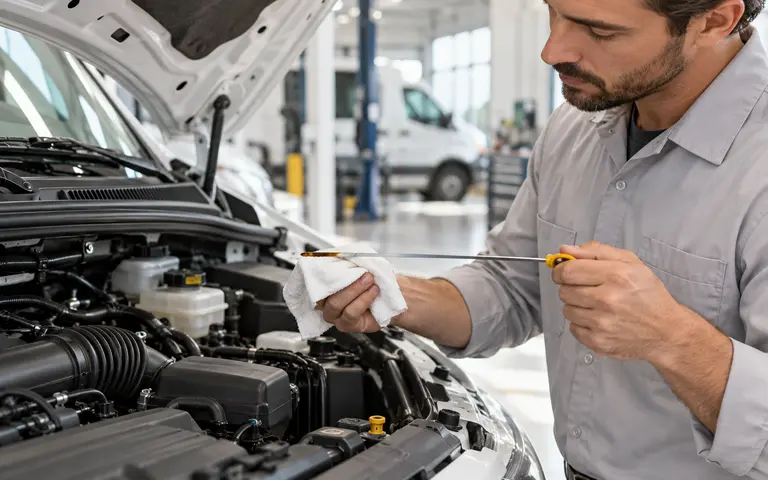
Per-vehicle PM intervals by class, inspections batched by expiration, one monthly invoice with cost-per-unit history — 27 bays keeping Capital Region fleets on the road.
Quoted per vehicle
Fleet Priority Repair
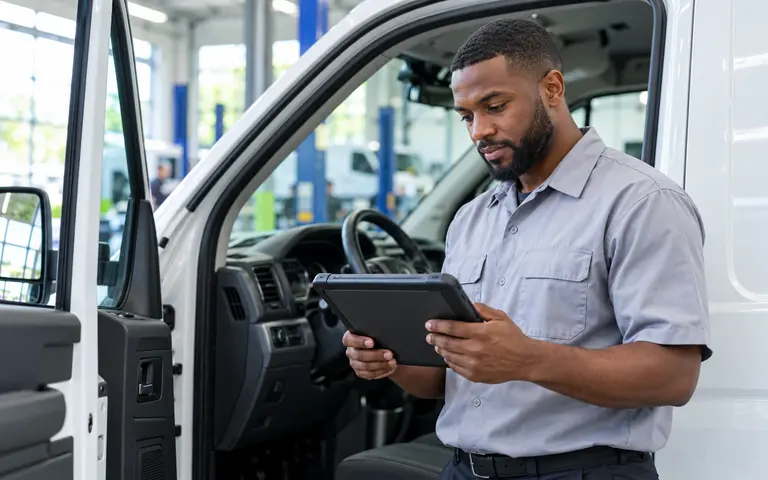
Fleet units jump the queue: same-day diagnosis credited to the repair, most repairs turned the same day across 27 bays, one call to the fleet desk and one monthly invoice.
Starting at $89
DOT Inspections
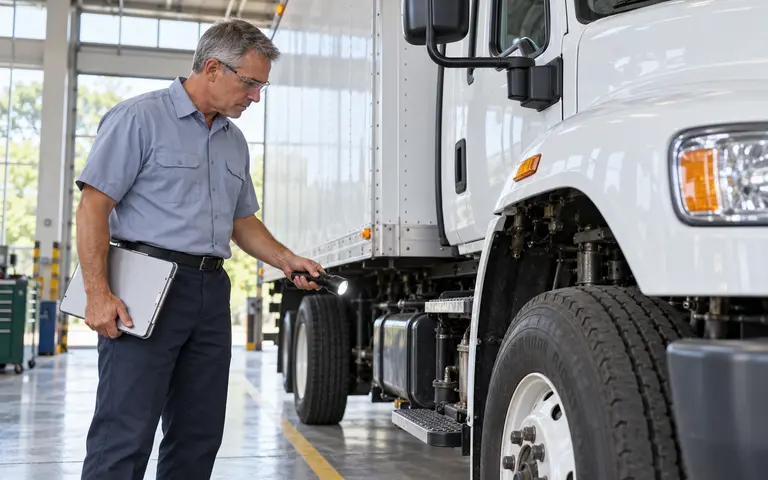
The 49 CFR 396.17 annual inspection for commercial motor vehicles over 10,001 lbs GVWR — brakes to coupling devices — with the decal, the 14-month report, and repairs on the same visit.
Quoted per vehicle
NYS Inspection
Annual NYS safety and OBD-II emissions inspection at the state-regulated $21 fee — usually while you wait, batched by appointment for fleets.
Starting at $21
Blog
Keep reading.
 Seasonal
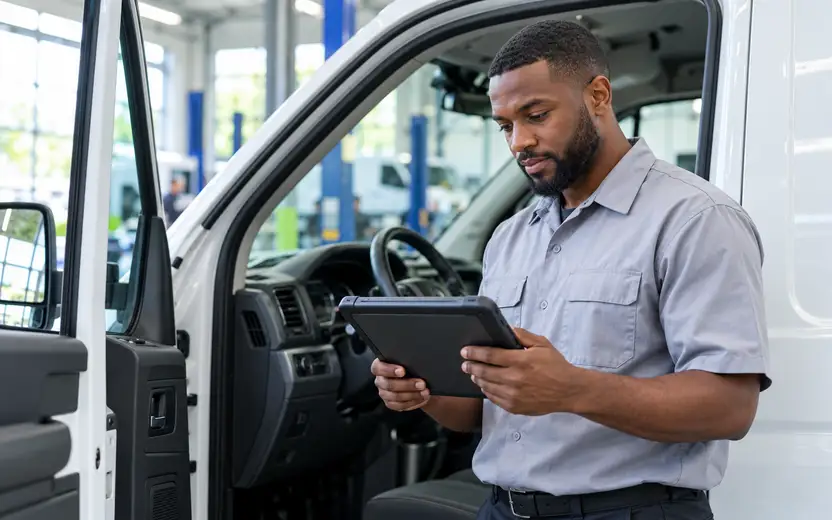
Winter Prep for Work Trucks and Cargo Vans in Upstate New York
8 min read
 Fleet
DOT Annual Inspections vs. NYS Inspections: Which Does Your Truck Need?
8 min read
 Straight Talk
Check Engine Light On? Why It’s an Automatic NYS Inspection Failure (and What It Costs)
7 min read
 Fleet
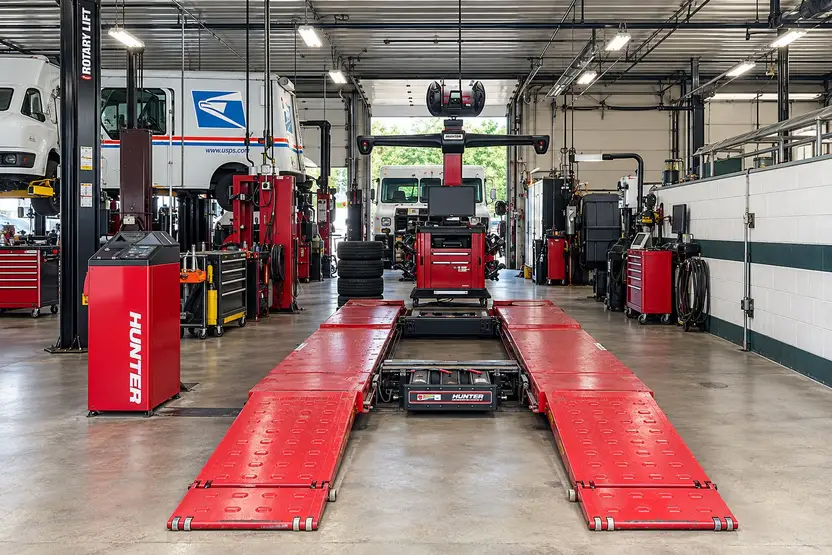
How the Postal Service Keeps Vans on the Route — and What Any Fleet Can Copy
8 min read
- Seasonal
Road Salt, Brine, and Brake Lines: Why Capital Region Vehicles Rust From the Inside
7 min read
 NYS Inspection
The NYS Inspection, Explained: What Fails in Schenectady County and Why
7 min read

Questions about your vehicle specifically?
Articles generalize; your vehicle is specific. Call (518) 348-7764 or book online — real answers about your actual car, van, or truck.