FleetJanuary 13, 2026 · 8 min read
What a Fleet Maintenance Program Actually Costs Per Mile (Capital Region Numbers)
Fleet managers ask us one question more than any other: what should this cost per mile? Here is the honest math for a Capital Region cargo van, line by line — and where a program moves the number.

Reviewed by the Fogg’s fleet & service team
ASE-certified technicians · Scotia, NY · Updated January 13, 2026
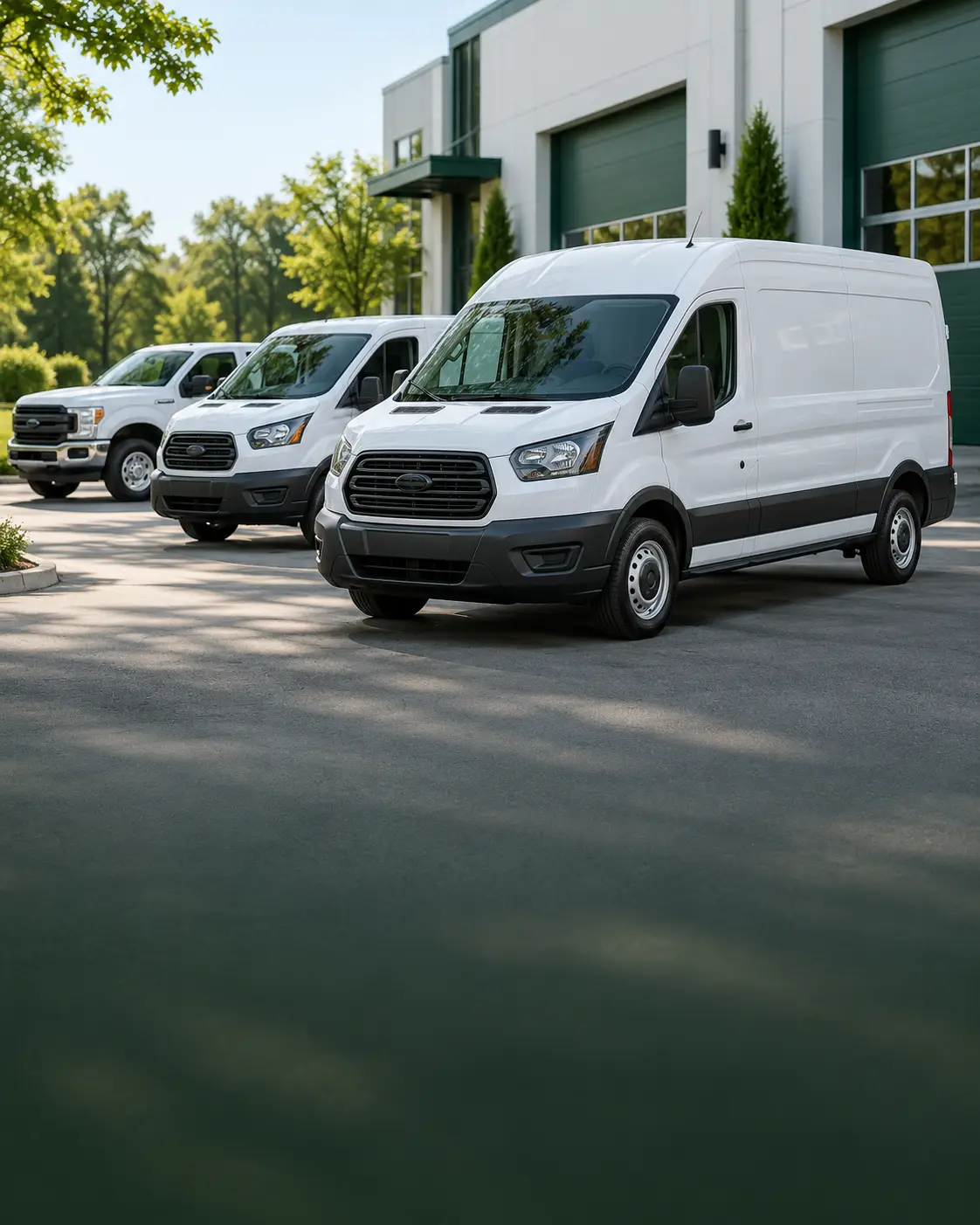
Every fleet manager who sits down at our counter on Saratoga Road eventually asks the same thing: “What should this cost me per mile?” It is the right question. Per-mile cost is the only number that lets you compare a six-van HVAC outfit in Schenectady with a twenty-truck landscaping company in Clifton Park, and it is the number your owner or board will actually read. Below is how we build it, using the published prices on this site and the driving that Capital Region vehicles really do.
One caveat before the arithmetic. These are typical figures for a half-ton or three-quarter-ton cargo van — a Transit, ProMaster, Express or Savana — running about 25,000 miles a year on a mix of Route 5, I-890, the Northway and residential streets. A Super Duty pulling a trailer up the Glenridge Road hill every day will cost more. A Prius doing in-town deliveries will cost less. The method is the same.
Line one: scheduled maintenance
Start with what the manufacturer says, then adjust for how the vehicle is used. A van on short stops with the engine idling for heat in January is severe service, whatever the oil-life monitor says. We put most Capital Region work vans on a 5,000-mile oil interval with synthetic-blend or full-synthetic oil, which at 25,000 miles a year is five services. Cars run $49–$69 at our shop; vans with larger sumps run a little more. Call it $400 a year including filters.
Add the items that live on a mileage schedule: engine and cabin air filters, a coolant service on the manufacturer’s interval, a brake-fluid exchange every two to three years, a transmission service around 60,000 miles, spark plugs around 100,000. Spread across a year, that is another $300–$450 for a gas van. Total scheduled maintenance: roughly $750 a year, or three cents a mile.
Line two: tires
Tires are the second-largest line on most light fleets and the one most managers underestimate. A set of commercial LT tires for a full-size van runs $800–$1,100 installed. In this climate, with our potholes and our salt, 40,000–50,000 miles is a realistic life if the van is rotated and aligned. That is one set every two years, or $450–$550 a year. Add two rotations and an alignment check annually and the tire line lands near two and a half cents a mile.
The alignment check is not optional here. Route 7 and Route 5 after a freeze-thaw week will knock toe out of spec, and a van that is a quarter degree off eats its front tires from the inside edge where nobody looks. Catching it on a rotation is a $30 conversation. Missing it is two new tires at 18,000 miles.
Line three: brakes and wear items
Brakes on a stop-and-go delivery van last 30,000–45,000 miles per axle. At our published $189–$429 per axle, a van will see roughly one axle done per year once it is past its first set. Wiper blades, bulbs, a battery every four or five winters, belts and hoses on the schedule — about $500 a year altogether, or two cents a mile.
Line four: the NYS inspection and compliance
Every vehicle registered in New York needs an annual safety and emissions inspection; in Schenectady County the state-regulated fee is $21. The fee is trivial. The cost is the time: a van that fails on a check-engine light or a rusted brake line is a van off the route until it is fixed and re-inspected. We batch inspections for fleet accounts — three or more units in a morning — so the fee stays $21 and the downtime stays under an hour per vehicle.
Line five: the breakdown tax
This is the line that separates fleets with a program from fleets without one. An unplanned repair costs the repair plus a tow, a driver standing in a parking lot, a missed job and often a rental. A $400 alternator becomes a $1,200 day. In our experience across Capital Region accounts, vehicles with no program average one to two unplanned events a year; vehicles on a preventive program average well under one, because the alternator that was whining in October was replaced in October.
Put a conservative value on it: one avoided breakdown a year at $800 of indirect cost is three cents a mile that never shows up on an invoice — which is exactly why it gets ignored.
Adding it up
- Scheduled maintenance: about 3¢ per mile
- Tires, rotations and alignment: about 2.5¢ per mile
- Brakes and wear items: about 2¢ per mile
- Inspection and compliance: under 0.5¢ per mile
- Unplanned repairs: 2–5¢ per mile without a program, 1–2¢ with one
That puts a Capital Region work van at roughly nine to eleven cents a mile for maintenance and repair when it is managed, and twelve to fifteen cents when it is not. On 25,000 miles the gap is $750–$1,000 per vehicle per year. Across six vans it is a part-time employee; across forty it is a new truck.
Where a program moves the number
A program is not a discount. The oil still costs what oil costs. The program moves the per-mile number three ways. First, intervals get followed, because somebody other than the driver is watching the odometer. Second, wear items get replaced on your schedule instead of the vehicle’s: the brakes measured at 3 millimeters in March get done the week you have a slow Tuesday, not the day they start grinding on Erie Boulevard. Third, the record keeping is done for you. Every vehicle gets its own history on one monthly invoice, so you can see that unit 14 has cost twice what unit 9 has and make a decision about it.
Our fleet program at Fogg’s works on per-vehicle intervals, priority scheduling when something does break, batched NYS inspections and consolidated monthly billing with per-unit cost tracking. Two work vehicles is enough to open an account. If you want the per-mile math done on your actual fleet rather than our example van, bring the registrations and the last year of repair receipts to 642 Saratoga Road in Scotia, or call the fleet desk at (518) 348-7764. The walkthrough takes twenty minutes and it is free.
General information for Capital Region drivers and fleet managers — not a diagnosis of your specific vehicle. Prices referenced are typical ranges; your exact quote is confirmed in writing before any work.
Services in this article
The work behind the article.
Each service has its own page with what’s included and a published price range.
Fleet PM Programs

Per-vehicle PM intervals by class, inspections batched by expiration, one monthly invoice with cost-per-unit history — 27 bays keeping Capital Region fleets on the road.
Quoted per vehicle
Oil Changes

Full-synthetic and conventional oil changes with a free multi-point inspection — in and out fast, no upsell games.
Starting at $49
Fleet Tires
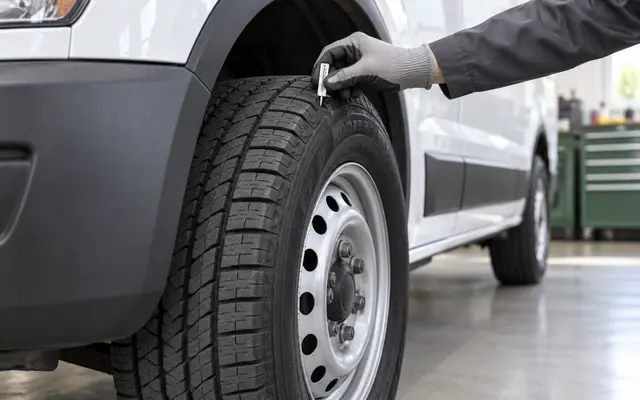
Tread depth on record at every PM, LT and commercial tires quoted per tire, mounting and rotation bundled into scheduled visits — tires replaced on your calendar, not on the shoulder.
Quoted per vehicle
Brakes
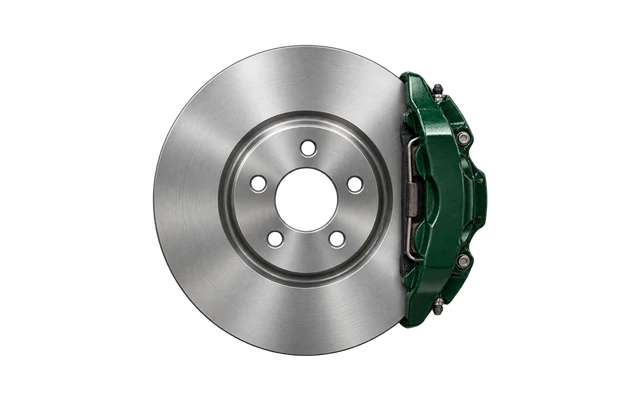
Pads, rotors, calipers, brake lines, and fluid — measured in millimeters, photographed, and quoted before any work begins.
Starting at $189
Blog
Keep reading.
 Seasonal
Winter Prep for Work Trucks and Cargo Vans in Upstate New York
8 min read
 Fleet
DOT Annual Inspections vs. NYS Inspections: Which Does Your Truck Need?
8 min read
 Straight Talk
Check Engine Light On? Why It’s an Automatic NYS Inspection Failure (and What It Costs)
7 min read
 Fleet
Choosing a Fleet Service Provider in Schenectady: 9 Questions to Ask
8 min read
 Fleet
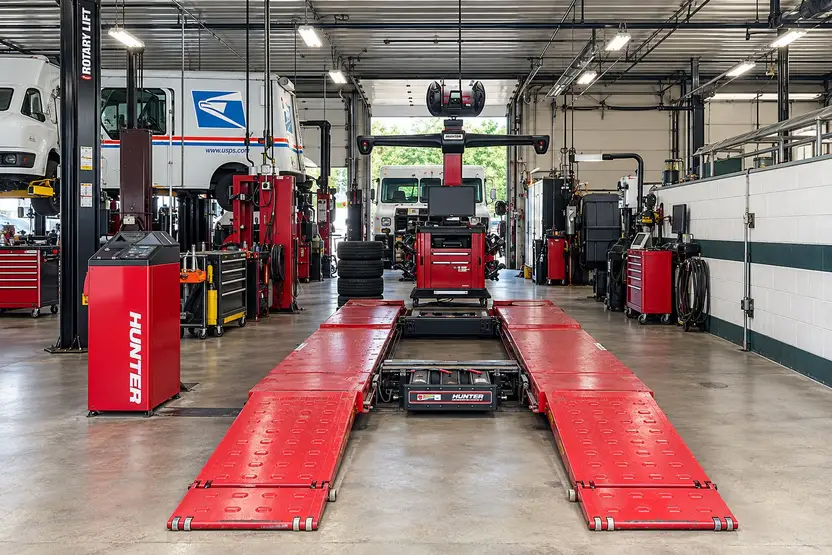
How the Postal Service Keeps Vans on the Route — and What Any Fleet Can Copy
8 min read
- Seasonal
Road Salt, Brine, and Brake Lines: Why Capital Region Vehicles Rust From the Inside
7 min read

Questions about your vehicle specifically?
Articles generalize; your vehicle is specific. Call (518) 348-7764 or book online — real answers about your actual car, van, or truck.